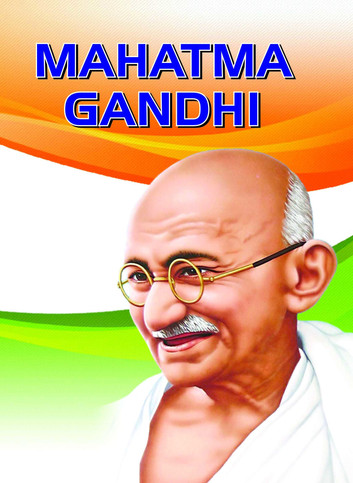
The story begins at a small railway station in Pietermaritzburg, South Africa. A common man, despite holding a valid first-class ticket, was thrown off a train. His crime? God given him birth in a brown family.
A white police constable forcibly pushed him out into the cold night, simply because he did not carry the “right” identity in a land ruled by racial prejudice. But that single push did something no one could have predicted — it began to reshape his identity completely, from Mohandas to Mahatma.
That single, violent act of contempt — did something extraordinary. It didn’t break him. It ignited him.
As the cold crept into his bones that night, something else began to burn inside him — a fire of realization, of fury, of purpose. The seed of a revolution was planted in that darkness, a seed that would one day grow into a movement powerful enough to free 400 million people from the chains of an empire.
And yet — here’s what makes this story almost unbelievable: the man who would become that storm was, until that very night, nothing like one.
At just 23 years old, Mohandas Karamchand Gandhi was timid. Shy. The kind of man who hesitated to speak in public, who shrank from confrontation, who doubted his own voice.
But injustice has a way of awakening even the quietest souls.
That freezing night at Pietermaritzburg station wasn’t just an act of cruelty — it was a turning point in human history. From that moment on, the timid young lawyer began to vanish, and in his place rose a man the world would come to know as Mahatma — the Great Soul.
One push. One night. One moment of humiliation.
And from it — a movement that would shake an empire to its knees.
The Event
24-year-old Gandhi, a young Indian lawyer with a valid first-class ticket, was traveling from Durban to Pretoria in South Africa.
A white passenger objected to Gandhi sitting in the first-class (whites-only) compartment Gandhi refused to move despite the racial segregation rule.
Railway authorities forcibly threw Gandhi off the train at Pietermaritzburg station.
That Cold Night
After being ejected, Gandhi endured:
- Bitter winter cold at high-altitude Pietermaritzburg.
- No overcoat (his coat was in luggage on the train; he “did not dare to ask for it lest I should be insulted again”)
- “Sat and shivered” in a dark waiting room with no light
- Emotional isolation – when another passenger entered at midnight, he was in no mood to speak
The Psychological Transformation
While shivering in the cold, Gandhi asked himself:
“Should I fight for my rights or go back to India, or go on to Pretoria without minding the insults?”
He decided:
Running back would be cowardice.
The hardship was just a “symptom of the deep disease of colour prejudice”
He must “root out the disease and suffer hardships in the process”
Scientific Psychology of People Like Gandhi
Post-Traumatic Growth (PTG) Theory
Hardship leads to better outcomes when used as opportunity for self-assessment. The difference depends on the story the person tells themselves about the trauma.
People with “some lifetime adversity” report better mental health and well-being than those with no adversity.
The cold night at Pietermaritzburg wasn’t just suffering – it was the catalyst for complete psychological transformation from timid young man to “soul force warrior” through the scientifically documented process of post-traumatic growth.https://www.psychologytoday.com/us/basics/post-traumatic-growth
People like Gandhi naturally follow this 6-step path:
- Something bad happens (Trauma)
Example: Gandhi being thrown off the train.
- They think deeply about it (Purposeful Reflection)
Example: That night Gandhi asked himself: “Should I fight or go back to India?”
- They change how they see it (Cognitive Reappraisal)
Example: Gandhi realized this wasn’t just about one train seat—it was about “color prejudice”
- They find new meaning (New Meaning)
Example: “I should try to root out this disease and suffer in the process”
- They become stronger (Personal Strength)
Example: Timid young man → confident fighter
- They help others (Leadership/Service)
Example: Gandhi fought for Indians in South Africa for 21 years, then led India’s independence
Conclusion:
But this story isn’t only about Gandhi. It’s about every timid soul unaware of the strength quietly waiting inside them — until life forces it to the surface.
Life isn’t a straight line. It’s a series of dots — some joyful, some ordinary, some painful. We rarely choose these dots. What we choose is the meaning we give them afterward.
That cold night in Pietermaritzburg could have remained just another humiliation, buried and forgotten. Instead, Gandhi let it become the line connecting who he was to who he was capable of becoming.
The same painful moment can become a scar we hide — or a turning point we build on. So the next time life pushes you off a train you had every right to be on, ask yourself the question that changed everything for a timid 23-year-old lawyer on a dark platform:
Is this the end of the story — or just the beginning of a new one?